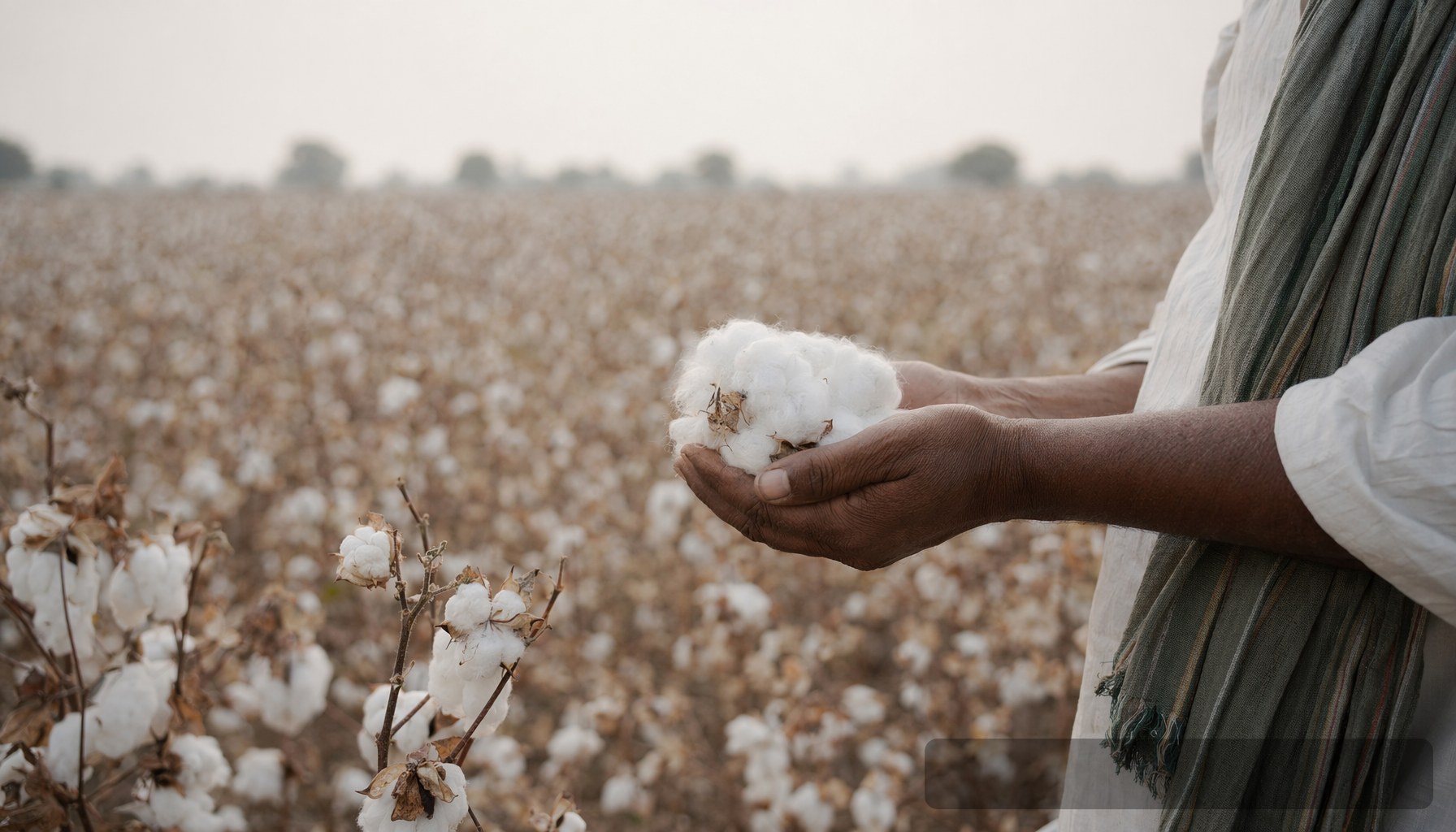
Indian farmers want to go regenerative but won't absorb transition costs alone. TNC's PRANA programme covers 6,826 Punjab villages. Brands need shared-cost frameworks and clear certification pathways.
This article is for informational purposes only and does not constitute legal, compliance, or sourcing advice. Verify certification and regulatory requirements with the relevant standards body or counsel.
Editorial note: Reported by The Sourcing Desk editorial team. We cross-reference claims against standards-body publications, regulatory filings, and primary sourcing data. Published 2026-06-06.
A two-day national conference convened in Delhi by The Nature Conservancy (TNC) and the Confederation of Indian Industry's Food and Agriculture Centre of Excellence (CII FACE) concluded on 4 June 2026 with a clear finding: Indian farmers are willing to adopt regenerative and climate-resilient agriculture, but the sector cannot scale without shared-responsibility frameworks that spread transition costs across buyers, financial institutions, and government.
The meeting drew policymakers, agribusiness leaders, farmers, researchers, and civil society organisations. It built on four years of field data from PRANA (Promoting Regenerative and No-burn Agriculture), TNC's programme operating across 18 districts and 6,826 villages in Punjab. That programme is currently the most advanced on-ground proof point for regenerative transition in Indian cotton and food-crop systems. The conference's stated aim was to move beyond isolated pilots toward integrated, systems-level solutions that connect policy, market incentives, financing, and last-mile delivery.
For apparel sourcing teams, the signal is direct: the upstream conditions for regenerative cotton sourcing in India are shifting, and the window to negotiate supplier transition agreements on favourable terms is open now, before certification and traceability requirements from the EU Corporate Sustainability Due Diligence Directive (CSDDD) and the EU Strategy for Sustainable Textiles tighten further.
What this means for sourcing teams
Cotton traceability is the ability to verify a finished garment's cotton content back through spinning and ginning to the farm of origin. Regenerative agriculture, in the context of cotton sourcing, refers to farming practices that rebuild soil health, reduce synthetic inputs, and sequester carbon, going beyond the floor set by organic certification schemes such as the Global Organic Textile Standard (GOTS) or the Organic Content Standard (OCS) administered by Textile Exchange.
The TNC/CII FACE conference identified three conditions that farmers say they need before committing to transition: reliable market signals that reward the change, institutional support from government and industry bodies, and affordable access to technology and infrastructure. Sourcing teams are best placed to address the first of those three.
Practically, that means several things for procurement and sustainability leads:
Supplier mapping should go beyond tier-one. If your Indian cotton supply runs through spinning mills in Gujarat or Maharashtra, or ginners in Telangana, ask them which farm clusters they source from and whether any overlap with PRANA districts in Punjab or comparable state-level programmes. TNC's PRANA footprint (18 districts, 6,826 villages) is a starting reference, not a ceiling.
Cost-sharing terms need to be written into supplier agreements, not left as aspirational language in sustainability reports. The conference consensus was explicit: farmers cannot bear transition risk alone. Brands that want regenerative fibre will need to offer price premiums, multi-year purchase commitments, or co-investment in training. The Better Cotton Initiative (BCI), which already operates farmer training networks across India, provides one existing channel for cost-sharing arrangements. Textile Exchange's Regenerative Agriculture programme and the Regenagri standard are two certification pathways worth tracking, though neither has yet published India-specific audit criteria at the scale PRANA covers.
Documentation requirements are evolving. Under the EU CSDDD, which entered into force in 2024 and begins phased application for large companies from 2027, brands will need to demonstrate due diligence on environmental and social impacts across their supply chains, including at farm level. Regenerative practice claims without third-party verification will not satisfy that bar. Sourcing teams should require suppliers to document which regenerative practices are in use, under what programme, and with what verification, before making any public claims.
Peer comparison is useful here. Indian cotton suppliers that have moved furthest on sustainability documentation include mills and ginners enrolled in BCI's India programme, those holding GOTS or OCS chain-of-custody certificates, and a smaller group pursuing Fairtrade cotton certification through Fairtrade International. No single supplier category covers all three. Sourcing teams comparing options should ask for current certificate numbers, not just programme membership claims, and verify them directly on the relevant standards body's public database.
What changed
The PRANA programme has been running for four years, but the June 2026 conference marks the first time TNC and CII FACE have convened a national multi-stakeholder meeting specifically to translate that field data into policy and market pathways. The shift from pilot to systems-level ambition is the change.
Marc De Sousa Shields, Country Director at the International Fund for Agricultural Development (IFAD), told the conference that scale depends on three forms of trust: farmers trusting that markets will reward change, that institutions will support them, and that technology will be accessible. Saswati Bora, TNC's Global Director for Regenerative Food Systems, described PRANA as "the most advanced proof point" for TNC's foodscapes strategy, which integrates market incentives and financing alongside agronomic change.
Sushil Saigal, Interim Managing Director of Nature Conservancy India Solutions (NCIS), said the conference produced "stronger alignment across government, industry, science, and finance" and that the task now is expanding PRANA's reach and integrating its findings into national policy frameworks.
That policy integration matters for sourcing teams because India's national agricultural policy shapes what subsidies, input access, and extension services farmers receive. If regenerative practices get embedded in India's national schemes, the cost of transition for farmers falls, which in turn reduces the premium brands need to pay to make the economics work.
The EU's Green Deal supply-chain requirements are the external pressure accelerating this. The EU Deforestation Regulation (EUDR), while focused on forest-risk commodities, has raised the general bar for farm-level traceability across agricultural supply chains. Cotton is not currently in scope, but the audit infrastructure being built for EUDR-covered commodities is setting expectations that will migrate.
Limitations and open questions
The conference produced consensus statements, not binding commitments. TNC has not published a revised PRANA expansion plan with specific district or village targets beyond the current 18-district footprint. CII FACE has not released a financing mechanism or cost-sharing model that brands can reference in supplier contracts.
Certification pathways for regenerative cotton in India remain fragmented. Regenagri has certified farms in other geographies but has not published India-specific audit criteria. Textile Exchange's Regenerative Agriculture programme is still developing its verification framework. GOTS has not announced a regenerative tier above its current organic standard. Sourcing teams should not present any of these as available, auditable standards for Indian cotton until the relevant body publishes criteria and accredited certifiers are operating in-country.
The PRANA programme covers Punjab, a state better known for wheat and rice than cotton. India's main cotton belts are in Gujarat, Maharashtra, Telangana, and Andhra Pradesh. Whether PRANA's model translates to those geographies, with different soil types, water regimes, and farmer economics, is an open question TNC has not yet answered publicly.
Finally, shared-responsibility frameworks require brands to accept some financial exposure at farm level. That is a procurement model change, not just a sourcing policy update, and it will need sign-off from finance and legal teams, not only sustainability leads.
This article is for informational purposes only and does not constitute legal, compliance, or sourcing advice. Verify certification and regulatory requirements with the relevant standards body or counsel.
Sources
- Agri sector stakeholders favour shared responsibility for transition to regenerative agriculture — The Hindu BusinessLine
- PRANA: Promoting Regenerative and No-burn Agriculture — The Nature Conservancy India
- Textile Exchange Regenerative Agriculture programme
- Better Cotton Initiative — India programme
- EU Corporate Sustainability Due Diligence Directive (CSDDD) — European Commission
- Global Organic Textile Standard (GOTS) — official standard documentation
- Regenagri regenerative agriculture certification standard